-

Patterns seem to be forming in episode three of World of Giants (WOG.) Two episodes in a row have opened with a scene in ‘the bureau’s’ office with, not a recap of how Mel Hunter (Marshall Thompson) was shrunk to six inches tall, but how he’s doing in the aftermath. For the second week, we…
-
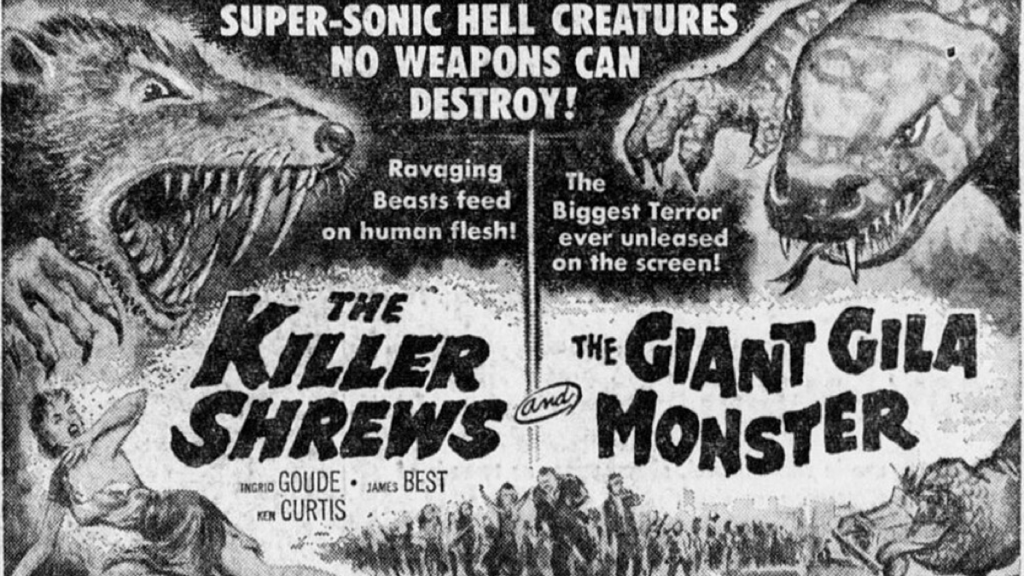
The much-maligned Atomic Age films, The Giant Gila Monster and The Killer Shrews, both from 1959, may have been made on the cheap, but they accomplish something few Hollywood blockbusters do: inspire our imaginations! Join Jeff and Richard as they travel back in time to the Tri-City Drive-In in San Pedro, California, for the ultimate…
-

After introducing the concept in episode one,World of Giants (W.O.G.) starts having fun with it in episode two, “Time Bomb.” The adventure is more exciting and the stakes higher. While Bill (Arthur Franz) is out in the garage of his apartment building repairing Mel’s tiny chair in his briefcase, Mel (Marshall Thompson) races against time…
-
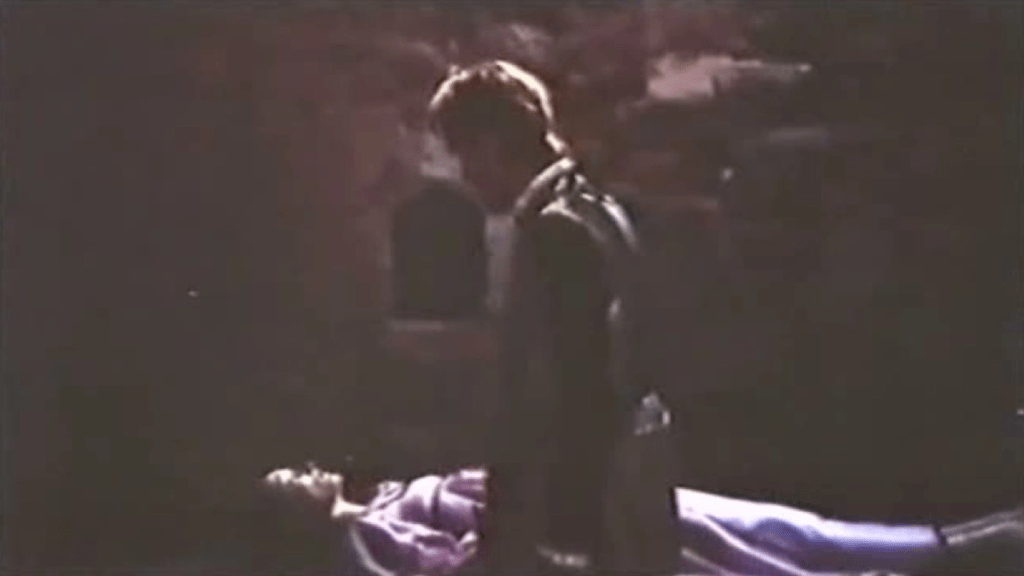
Of the four segments in Cake of Blood (1971) aka Pastel de Sangre, my favorite is the second, ‘Victor Frankenstein’. As the title indicates, the character is a familiar one, but this Frankenstein (Angel Carmona Ristol) isn’t your ordinary monster-maker, and El monstrou (Eusebio Poncela) is even more unique. First of all, this isn’t a…
-
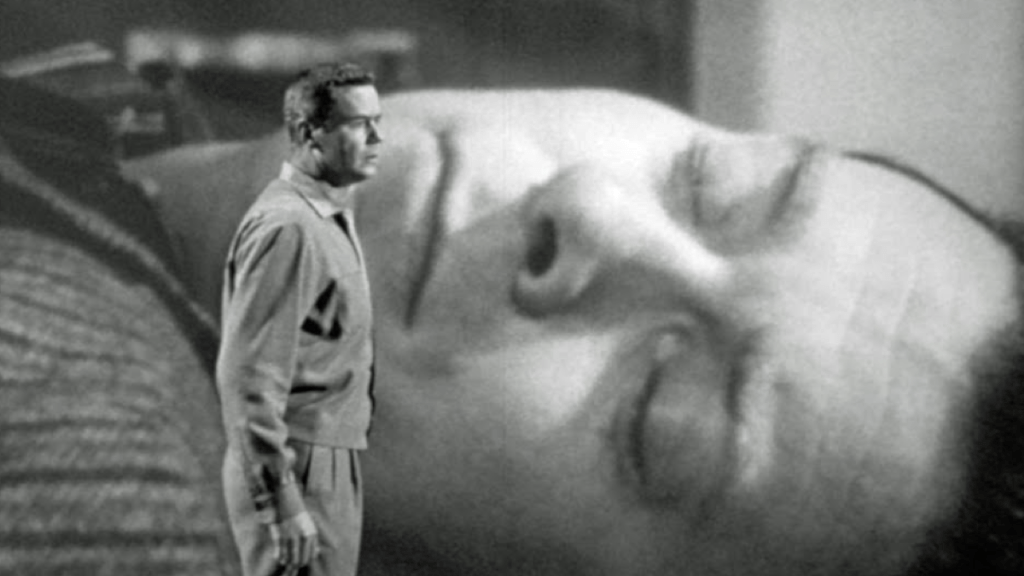
In the premiere episode of World of Giants (W.O.G.), “Special Agent,” we learn that while on a secret mission in the U.S.S.R., a rocket explosion during an experiment caused agent Mel Hunter (Marshall Thomson) to shrink to about six inches in height. It was essential to keep his condition classified, of course, because a man…
-

At one point during Necrophagous (1971), I considered shipping the blu-ray back to Severin Films with a note that the chapters were out of order. For nearly the first hour, I was completely confused about who the characters were and what the heck was happening. Shifting blame from Severin to the film’s editor, Maria Luisa…
-

Had you asked me last night after I finished watching The Ghost of Sierra de Cobre (1964), I would have said I was disappointed and that the movie was extremely slow-moving. Today, I can’t stop thinking about it and am about to march into the living room and watch it again! It has really gotten…
-

Paul Bartel was an openly gay filmmaker who also appeared on screen in over 90 movies and television shows. He directed his first feature film, Private Parts in 1972, which was produced by Gene Corman. Gene’s brother, Roger, subsequently hired him as second unit director on Big Bad Mama (1974) and director on Death Race…
-
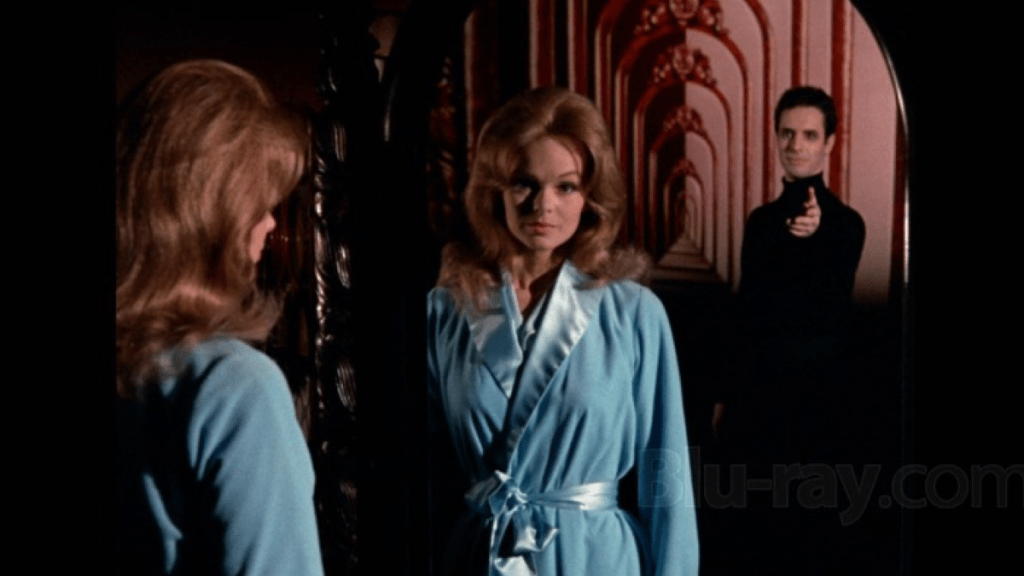
Over four years ago, I launched this 1970s TV-Movie series for the TV Terror Guide with a film called Ritual of Evil (1970.) Today, I end the series with the film to which Ritual was a sequel: Fear No Evil (1969.) We’ve climbed up the decade (and beyond), then back down, adding some movies that…
-
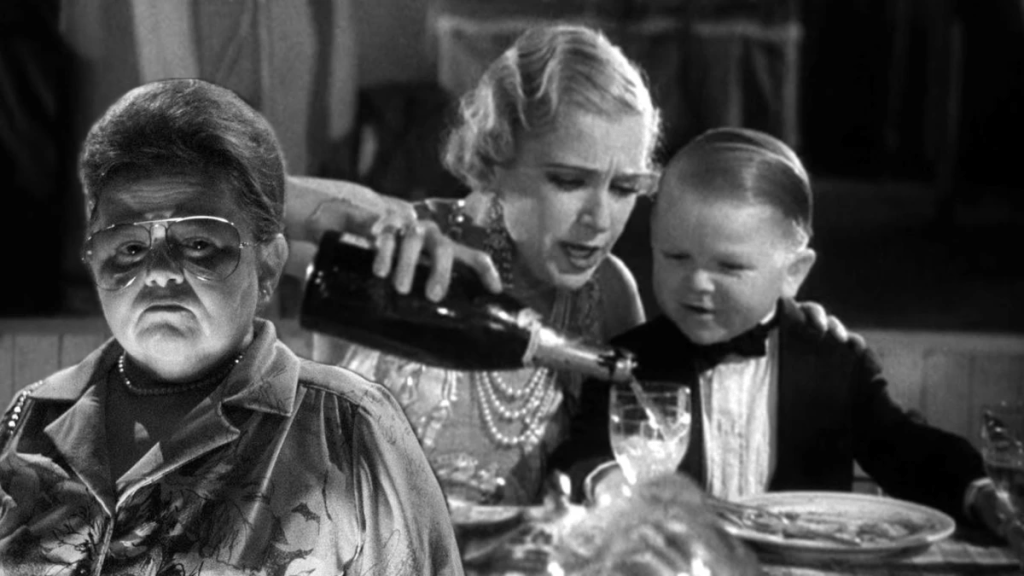
Join Jeff and Richard as they travel only a few months into the past to watch two movies released 50 years apart, one of them that’s 92-years old! First up is Poltergeist (1982) and then it’s Freaks (1932.) If you think that’s an odd double feature, consider that the third movie on the triple bill…
-
Subscribe
Subscribed
Already have a WordPress.com account? Log in now.
 Classic Horrors Club