
There’s a fun bonus feature on the Severin Films Blu-ray of The Beast in the Cellar (1971.) It provides a high level look at the genre output of Tigon Films, the distant third of the trio of British production companies in the 1960s and 1970s, behind Hammer Films and Amicus Productions. However, it spends most time, as it should, on the featured film on the disc. In any case, the man behind Tigon, Tony Tenser, appears in the bonus feature and says Tigon wasn’t trying to compete, it just wanted to make movies on the cheap so they would be profitable.
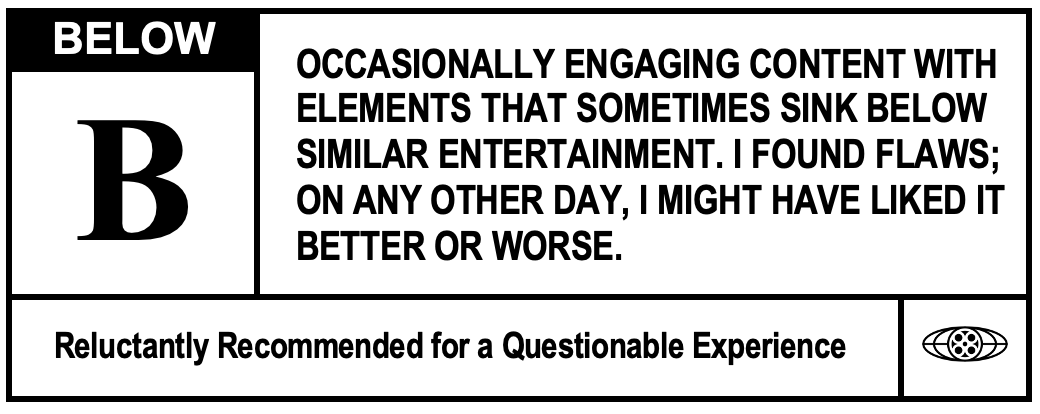
Tenser further claims to have built some of the films around their titles. He certainly changed names of movies after they were made thinking that’s all that was needed to put butts in seats. Hence, Satan’s Skin became The Blood on Satan’s Claw and The Cellar became The Beast in the Cellar. My point is that after watching this bonus feature, Tigon Tales of Terror, I’m inclined to believe any good movies from Tigon were made by accident and were the exception rather than the rule. Unfortunately, The Beast in the Cellar follows the rule; I didn’t much care for it.
Its opening intrigued me. When his vehicle breaks down on the moors, the soldier driving it hoofs it back to headquarters. On the way through the dark woods, there’s growling and he’s attacked by our point of view, representing either some kind of creature or a camera that’s possessed, spinning wildly and zooming in and out quickly. Post-credits, a young girl walking through the woods spots something and screams. We don’t know at what, but we assume it’s the soldier’s mangled body.
This is all well and good. I don’t mind that we get no clues to what attacked the soldier and what specifically it did to him. That’s to build mystery and suspense, right? It works… if you add a little more information with each attack and give us a big payoff at the end. This is where The Beast in the Cellar breaks a rule. The attacks don’t increase in scope; in fact, subsequent attacks are even shorter than the soldier’s, still utilizing the possessed camera. There is a payoff, but it’s not worth the wait. No spoilers, but what we’re eventually shown…
…doesn’t seem to be capable of the damage it causes, not by what we’re shown, but by what the dialogue tells us. The authorities have never seen anything like it… there are gashes and claw marks on the soldier’s body, perhaps from talons. Their best guess is something bigger and heavier than a puma, perhaps a leopard. When they wonder if the attacker is a human-animal or animal-animal, the fact that it only goes after those in military uniforms is a pretty strong indication that it’s the former.
Benefit of the doubt, there’s ground laid for a compelling movie. However, after the authorities examine the first body, we jump to the house where Joyce Ballantyne (Flora Robson) and her sister, Ellie (Beryl Reid) live as spinsters, their only source of joy coming from the occasional visits of a young, handsome soldier, Alan Marlowe (John Hamill.) These two argue about the most mundane things… Ellie has a heart condition; oh, no, she doesn’t… why didn’t Ellie get celery from the grocer… but the do like to gossip and that seems like the only time they get along.
This shouldn’t be a spoiler; just look at the title of the movie: the two women are holding a beast in the cellar. If they know the identity of the attacker, why are they gossiping about who or what it could be? Another benefit of the doubt, they at first don’t think their captive could have escaped its prison. Nevertheless, it’s very clunky when this fact is revealed. It’s a wide swing from “we don’t know anything” to “let’s go check the basement.” When we finally get an explanation, it’s also clunky, perhaps due to post-production meddling, as the two leads believed.
The Beast in the Cellar is at least ten minutes too long. There’s no reason for it not to come in just under 90 minutes. But it’s not all a slog. There are some effective moments, such as when “the beast” casts a Nosferatu-like shadow on the wall or when Ellie stands at the top of the stairs in darkness and emerges into the light as she moves forward. James Kelly directed only this and What the Peeper Saw (1972.) He wrote 13 others, including Doctor Blood’s Coffin (1961.) Comparing this and Doctor Blood’s Coffin, I see similar flaws and hold him responsible for the fundamental shortcomings of this one.

 Classic Horrors Club
Leave a reply to Guillaume Cancel reply