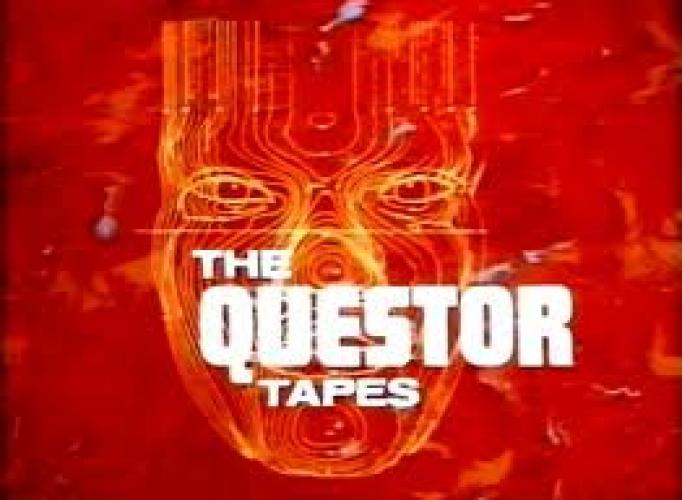
Here’s how old school I am. The Questor Tapes (1974) is a Gene Roddenberry (Star Trek) production and the titular character, played by Robert Foxworth, is an android that repeatedly uses the word “logic.” That reminded me an awful lot of Spock, so I thought the character was based on him. Duh! Research has shown that I had it backwards. Questor wasn’t based on anyone… Data from Star Trek: the Next Generation was based on Questor.
Looking back instead of forward, I completely forgot that some dialogue and even specific scenes were repurposed from The Questor Tapes in Next Generation. The main takeaway, though, is that among three failed attempts at creating new series (Genesis II, 1973; Planet Earth 1974; Spectre, 1977), this one actually got a green light for a 13-episode season. It was Roddenberry himself who backed out due to creative differences with NBC.
One of these differences was that NBC wanted to remove Questor’s buddy, Jerry Robinson, played by Mike Farrell. Since their chemistry is so good in The Questor Tapes and the characters share such delightful banter, I can’t imagine the android going solo. He is such a fish out of water that he needs a human companion to teach him the social skills he lacks because he spent most of his “life” in a lab.
Sure, he learns fast, but here at least, he doesn’t come close to acting completely human. He asks ironic questions out of his innocence such as, “Humans don’t perform immoral acts to find their creator?” and makes meaningful statements such as “It must be wonderful to know why you’re living.”
However, at times, he’s comical. When Jerry at first refuses to accompany him to London, he says to Questor, “I suppose you’re going to kill me.” Questor thinks about it for a beat, as if Jerry was correct, then dryly says, “I am not programmed to kill.” He also tells the lovely Lady Helena Trimble (Dana Wynter) something that Data will say in an early Next Generation episode, “I am fully functional.”
Questor was programmed by a scientist named Vaslovik who disappeared before his creation was finished. He’s thought to be dead, but they’ve never found a body. Questor and Jerry go on a globetrotting search for him, the machine looking for the meaning of his life and the man looking for the answer to the questions, “Suppose Vaslovik is not a good man, or what if he’s insane?”
I won’t reveal the outcome of their search; however, during it they learn that Questor is a walking atomic bomb. Vaslovik was afraid it would be used or misused, so there’s now a three-day race against time in their quest because… Vaslovik is the only person who can deactivate the bomb. It’s an additional layer to the story that, honestly, wasn’t necessary, but makes the movie more exciting.
As does John Vernon, who plays the head of Project Questor, Geoffrey Darro. For most of the film, he’s the bad guy, advocating to disassemble Questor, then chasing him and Jerry during their adventure, always a step behind, of course. However, near the end, he shows signs of being sympathetic. He tells the android he envies it for feeling no emotion. The android replies, “And I’d give anything to be human.”
The Questor Tapes is quite an enjoyable movie, one of the best I’ve seen from this era of 1970s TV-movies. I haven’t even mentioned the terrific score by Gil Melle and the cool way Questor forms his facial feature from the rubbery doll’s face with which he was created. Good for Roddenberry for standing up to NBC. I’d rather have 96 minutes of Questor and Jerry than 13 episodes of a partnerless android having “revolving romantic interests.”


 Classic Horrors Club
Leave a comment